When my wife Mol and I decided to become foster parents, we made two simple but essential choices.
What started as a short holiday placement of a Turkish baby with Down syndrome turned into years of tender care. Then, one day, the child was taken away without warning. We were devastated. The silence left behind felt unbearable.
A few weeks later, the foster agency called again. “There are two sisters,” they said. “The older one, Shana, has Down syndrome. The younger one does not. Their father died two years ago. Their mother has terminal cancer.”
The mother had grown up in an institution herself and wanted, more than anything, to prevent her daughters from facing the same fate. Out of pure love, she literally pushed them into our arms. That summer, while she was in and out of hospital, the girls came with us on holiday to Italy. Later, their mother visited us there, to see for herself that her daughters were happy. When she passed away, the children stayed with us. The transition was gentle, as if life itself had quietly prepared it.
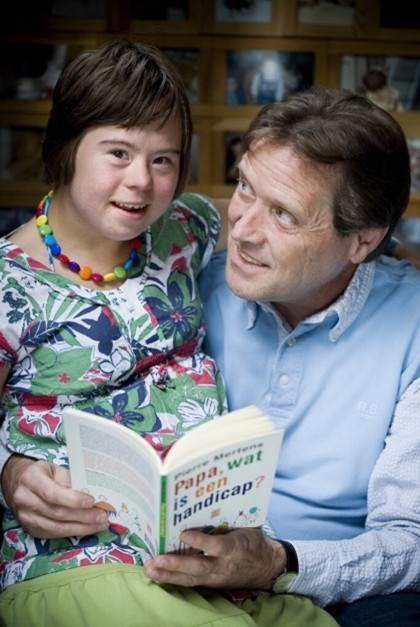
Shana has Down syndrome — and she has a gift for happiness. She loves travelling, though she is attached to her own rhythm and rituals. Every evening she carefully lays out her clothes for the next day, in the exact order she will put them on: from underwear to dress, all colour-coordinated and perfectly neat.
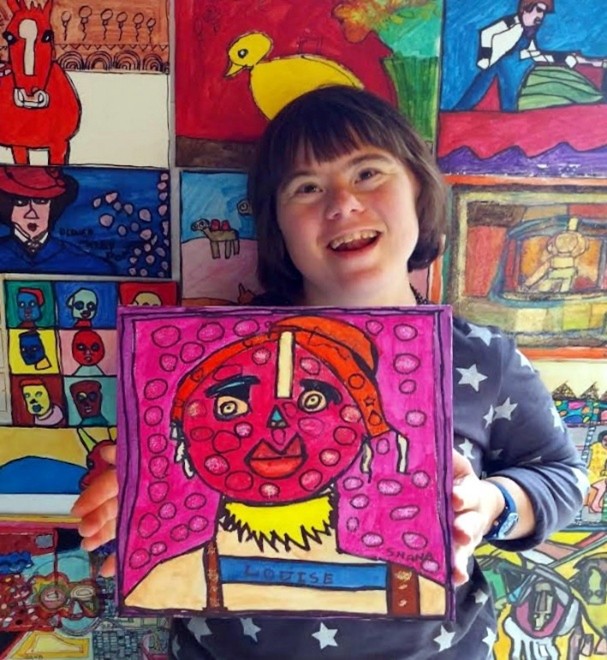
She lives her life with grace and dignity. She takes public transport alone across Antwerp to her art studio, where she paints several times a week. One day a police officer stopped her:
“What are you doing here all alone?” he asked, worried.
Shana handed him her phone without a word.
Mol, at the other end, answered calmly: “She’s on her way to her painting class — and now you’re making her late.”
The embarrassed policeman apologized and gave her a lift in his car.
That, to me, is emancipation: when a young woman with Down syndrome moves through the city with confidence, claiming her space, guided by trust rather than fear.
Mol made that possible. She has always believed in letting children take their own risks, however small. Our biological daughter Liesje, who was born with spina bifida, once received an electric tricycle to move independently. I was worried and wanted to walk beside her. “Let her try,” Mol said. She was right. There was never an accident.
In addition to painting, Shana has spent the past twelve years touring with the professional theatre company FC Bergman. With them, she has performed in Belgium and across Europe — and even in New York City. She is the only actor in the company with a disability, yet she brings something irreplaceable: warmth, sincerity, and a quiet presence that transforms the entire group.
Her colleagues often say that Shana gives the ensemble its soul — a sense of human connection they might otherwise lose in the hectic world of professional theatre. Recently she was invited again to join their next production. That, I believe, is what true inclusion looks like.
And once again, it is Mol’s loving coaching that makes such freedom possible. She travels with Shana, supports her emotionally, helps her navigate rehearsals and touring life, yet never takes over. She gives Shana just enough space to shine on her own.
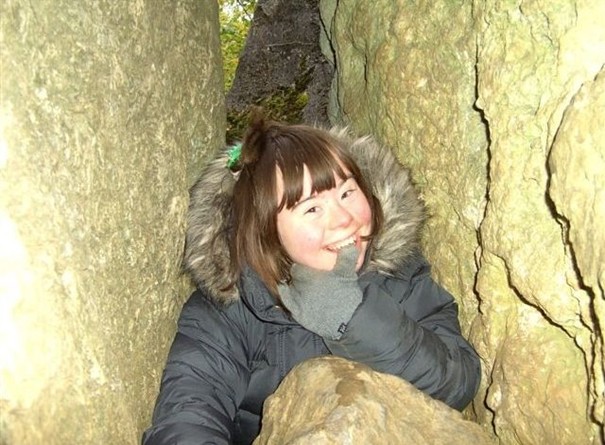
Years ago, Mol, Shana and I travelled to Lalibela, Ethiopia — a sacred city carved from rock, one of the most extraordinary places on Earth. Shana was fascinated by the ancient churches and the pilgrims dressed in white. But when the local school children poured out into the streets, they laughed at her.
We had never experienced that in any other country. Adults were gentler — some smiled, others tried to kiss her, which made her uncomfortable. What struck me most was that during an entire week, we had not seen a single person with a visible disability.
Visibility matters. Only when people see children and adults with disabilities in everyday life — studying, working, creating, performing — can they learn to accept and include them.
That is why I founded Child-Help, an organization that supports children born with spina bifida and hydrocephalus in Africa and beyond. Our work in Ethiopia, with a local partner called SBH Hope, aims to make hope visible — to turn inclusion into something you can touch.
In Belgium today, almost all pregnancies diagnosed with spina bifida are terminated. The same happens with most children diagnosed with Down syndrome. The argument is always the same: “poor quality of life.” But that’s a cruel illusion.
If you met Shana, you would see how wrong that idea is. She wakes up smiling, works as a volunteer in a community kitchen, paints almost every day, performs on stage with joy, and takes genuine pleasure in small things — a cola zero in her favourite café, a walk in the park, a new song on her phone. She is the proud aunt of all our grandchildren.
If I were not so happy myself, I might want to trade lives with her. She has what so many of us are losing: authenticity, serenity, presence.
As the Dutch comedian Youp van ’t Hek once said: “Do you really think the world would be a better place without children with Down syndrome?”
I am convinced it would not. Shana embodies a kind of love that is unconditional, unfiltered, and deeply human.
As an artist, I have often struggled with the limits of empathy in a world obsessed with perfection. Years ago, I sculpted a small foetus with spina bifida, placed it in a glass jar, and titled it Je cherche un avocat — I’m looking for a lawyer.
I realise now that I became that lawyer myself — not in a courtroom, but in life. My art and my activism are both pleas for dignity. In Belgium, an unborn child has no legal status, and therefore no defence. Science advances so fast that ethics constantly lags behind. Laws try to follow, but in the meantime, decisions are made in a grey zone — where compassion must guide us.
Every time I look at Shana, I am reminded what true humanity looks like: vulnerable, joyful, and free of masks. She doesn’t hide behind status or success. She just is — fully and beautifully herself.
India today is asking the same questions Belgium once faced: How do we define a “good life”? What does inclusion mean when poverty and inequality are already so present?
Raising Shana has taught us that inclusion begins at home. It begins when you stop trying to fix someone, and start learning from them. People with Down syndrome teach us about patience, routine, and joy in repetition. They remind us that life is not about constant progress, but about connection.
When Shana enters a room, she changes its rhythm. She slows us down, makes us laugh, and grounds us in the moment. In a world obsessed with efficiency, she reminds us that the most essential things — kindness, trust, tenderness — take time.
The title of my latest book, Together and Bare, captures this simple truth. To live fully, we must strip away what is unnecessary — titles, masks, ego — and meet each other as we truly are.
Shana does this naturally. She is, in her own way, a teacher of humanity.
Raising her was never about charity. It was about learning — learning that love is not an achievement, that autonomy grows from trust, and that dignity cannot be measured by intelligence or productivity.
In our world, we like to think that we care for people with disabilities. But more often, it is they who care for us — by reminding us who we are.